Menu

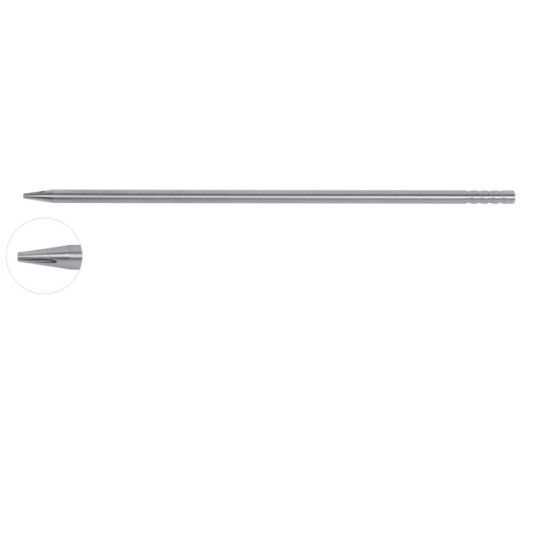
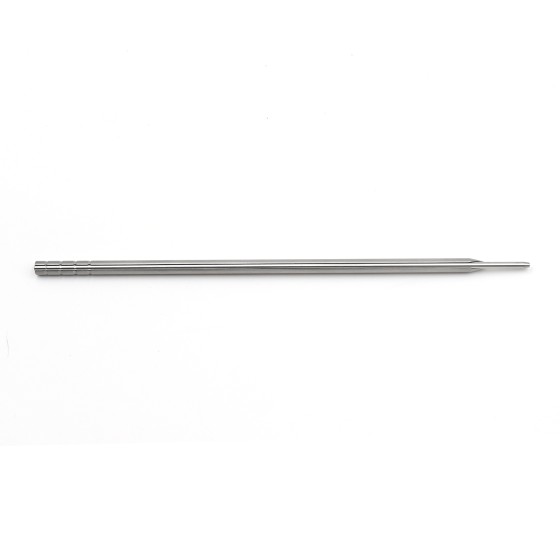
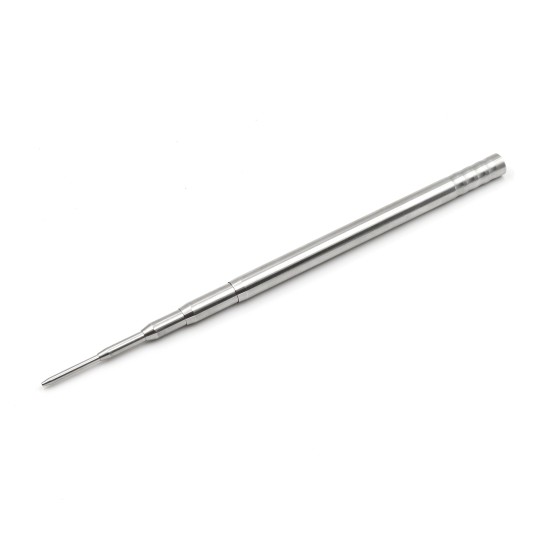
Single-channel guide rods for spinal endoscopic surgical instruments

Quantity:
Sales: 765
SKU:{{ product.sku }}
Model: {{ product.model }}
weight: {{ product.weight }} Gram

{{ variable.name }}

{{ value.name }}
Spinal endoscopic surgical instruments - guide rods - Single-channel guide rods Product description
I. Specification Details
This single-channel guide rod is designed to meet the diverse surgical requirements under the intervertebral aperture of spinal endoscopy and comes in a variety of precise specifications, specifically including 6.5MM, 7.0MM, 7.5MM, 8.0MM, 8.5MM and 9.5MM. Different specification designs are intended to adapt to the spinal anatomical structures of different patients and the precision requirements of surgical operations, ensuring precise positioning and auxiliary operations in all types of spinal surgeries.
Ii. Usage Method
  1. Preoperative preparation stageBefore performing a spinal endoscopic transforaminal endoscopy surgery, doctors will select the most suitable single-channel guide rod based on the location and type of the lesion determined by preoperative imaging examinations such as CT or MRI, as well as the patient's own spinal anatomical characteristics. For instance, for patients with a rather special lesion location and a relatively narrow intervertebral aperture, a guide rod with a smaller diameter of 6.5MM or 7.0MM May be preferred to enable more precise access to the surgical area and minimize interference with the surrounding tissues to the greatest extent. For some cases where the intervertebral aperture is relatively wide and the surgical operation space is slightly larger, guide rods of 7.5MM or larger specifications may be selected.
  1. Surgical operation process
  • Puncture guidanceUnder the real-time fluoroscopy guidance of the C-arm X-ray machine, the doctor holds a single-channel guide rod of the selected specification and advances through percutaneous puncture into the lesion area with extremely precise angles and forces. During the puncture process, every 0.5cm or so of advancement, the position of the guide rod needs to be reconfirmed through the C-arm machine to ensure that it always moves along the predetermined path, avoiding damage to the surrounding important nerves, blood vessels and other tissues due to deviation in the puncture Angle or improper depth.
  • Establish the initial channelWhen the guide rod is successfully punctured to a position close to the lesion area (the distance from the target lesion, such as a protruding nucleus pulposus tissue, is generally controlled at a precise distance of about 2mm), it initially establishes a channel guidance in the intervertebral foramen area of the spine for subsequent surgical instruments to enter. At this point, the guide rod plays a stable supporting and guiding role, laying the foundation for more precise surgical operations in the future.
  • Guide the endoscope and instruments inAlong the single-channel guide rod that has been punctured in place, the doctor will carefully and slowly insert and advance the outer sheath of the spinal endoscope until it reaches the lesion area. The surface of the guide rod is smooth and has a certain degree of hardness, which can ensure that the outer sheath maintains a stable direction during the advancement process, without deviation or distortion, thus smoothly establishing the operation channel required for the surgery. Subsequently, various surgical instruments such as nucleus pulposus forceps and radiofrequency electrodes can pass through this channel and, under the guidance of the guide rods, accurately reach the lesion site to carry out subsequent operations such as tissue resection and hemostasis.
Iii. Positioning Function
  1. Accurately locate the lesionSingle-channel guide rods play a crucial positioning role in the entire spinal endoscopic intervertebral aperture surgery. Because it can precisely puncture and reach the vicinity of the lesion area under the monitoring of imaging equipment, it provides doctors with a direct and accurate reference for the location of the lesion. This enables doctors to clearly distinguish the boundary between the diseased tissue and the surrounding normal tissue based on the position of the guide rod during subsequent surgical operations, greatly enhancing the accuracy of the surgical operation and reducing the risk of misoperation.
  1. Maintain the stability of the surgical pathDuring the surgical procedure, the guide rod continuously plays a crucial role in maintaining the stability of the surgical path. When surgical instruments enter the lesion area along the channel established by the guide rod, the guide rod can prevent the instruments from deviating from the predetermined surgical path during the entry process due to the resistance of the surrounding tissues or slight shaking during the doctor's operation. This stable positioning effect ensures that surgical instruments can always accurately act on the lesion site, improving the efficiency and safety of surgical operations. Especially when dealing with some spinal lesions with complex locations and fine surrounding anatomical structures, its positioning advantages are even more significant.
  1. Assist in adjusting the surgical operation AngleDuring the operation, doctors can also flexibly adjust the operating angles of surgical instruments according to the position and direction of the guide rods. By observing the relative position relationship between the guide rod and the surrounding tissues, doctors can intuitively determine the direction and Angle that the instrument needs to adjust, thereby performing more precise operations such as resection and repair of the diseased tissues. For instance, when removing the protruding nucleus pulposus tissue within the intervertebral foramen, doctors can adjust the nucleus pulposus forceps to the most appropriate Angle based on the positioning of the guide rods to achieve complete removal of the nucleus pulposus tissue while minimizing damage to the surrounding nerves and blood vessels to the greatest extent.
Upload a JPG or PNG image. 300 x 300 is recommended.
Only jpg/jpeg/png/mp4/mov files can be uploaded, and it should not exceed 50M
Submit Cancel
Add Reviews
Add Reviews
{{ item.user_name_format }}

{{ item.content }}

{{ item.created_at_format }}

Reply:

{{ item.reply }}

Related Products
Dual-channel guide rods for spinal endoscopic surgical instruments
SELF
Dual-channel guide rods for spinal endoscopic surgical instruments
please To check the price
Sales:983
Spinal endoscopic surgical instrument eccentric guide rod expansion tube
SELF
Spinal endoscopic surgical instrument eccentric guide rod expansion tube
please To check the price
Sales:236
Spinal endoscopic surgical instrument step-by-step expander
SELF
Spinal endoscopic surgical instrument step-by-step expander
please To check the price
Sales:798